
Notes from the Field
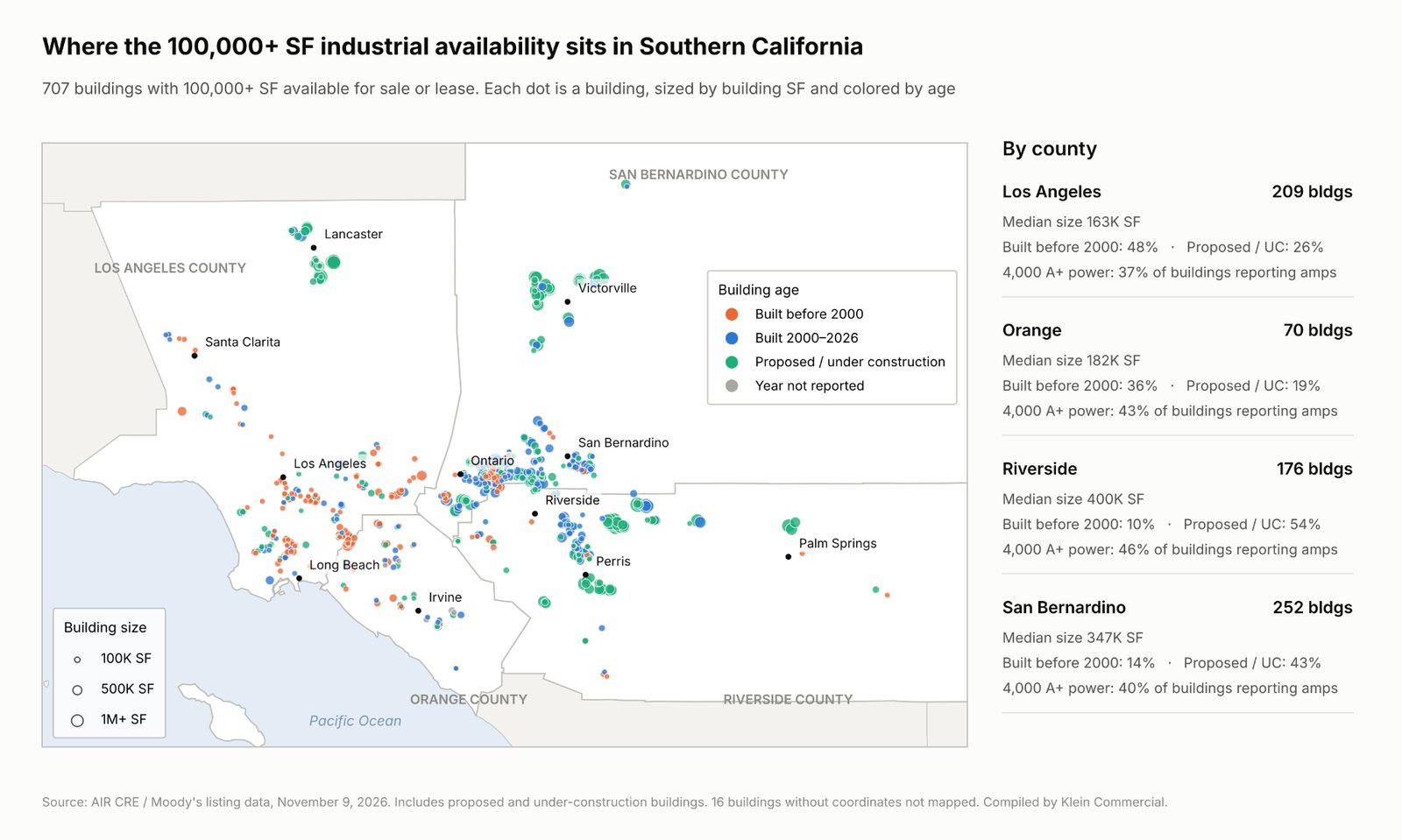
Southern California availability is at a high point
Available industrial space in Southern California is at a high point, and the pressure is coming from several directions at once. Tariffs, particularly on Chinese goods, have reduced imports and reshaped the warehouse, distribution and transportation network. Southern California is the nation’s primary gateway to China, so it is the region most exposed to trade.
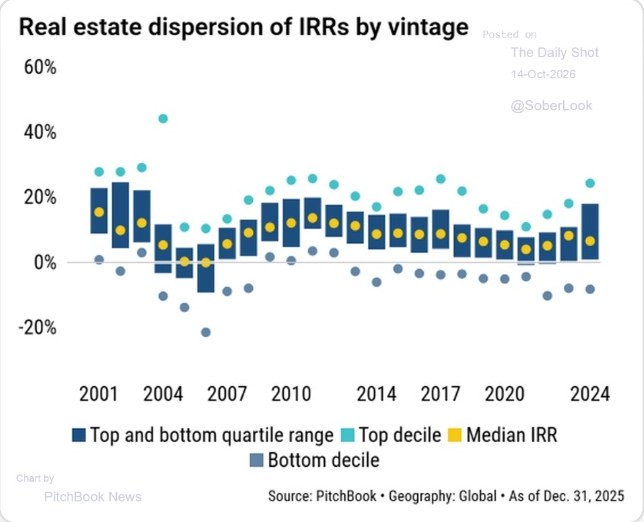
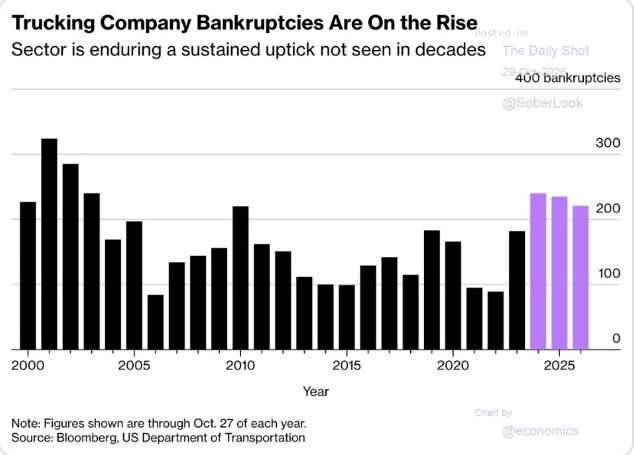
High fuel and diesel prices have squeezed profits for many warehouse and distribution businesses, and the slowdown is crimping both day-to-day operations and expansion plans. Immigration enforcement and stricter federal rules for commercial drivers have thinned the driver pool, which has reduced the number of tenants for truck yards — until recently the strongest segment of Industrial Outdoor Storage (IOS). Higher interest rates and lower rents have broken many pro forma projections, and the investment and refinance markets have stalled.
A new federal rule for importers
One narrow but far-reaching federal rule bears directly on warehousing and distribution. Under a new U.S. Customs and Border Protection rule that takes effect January 5, 2027, foreign importers of record must either be validated members of the Customs Trade Partnership Against Terrorism (CTPAT) program or file their entries through a CTPAT-validated customs broker. If they do neither, their goods will not be released at U.S. ports of entry.
Effective January 5, 2027: foreign importers of record must be CTPAT-validated or use a CTPAT-validated customs broker for every entry.
Because CTPAT validation rests on proven supply-chain security, we expect the pressure to flow down to the 3PLs and warehouses that handle these goods. New, free-standing buildings are far easier to fully secure and control than older ones, and smaller operators will find it harder to qualify.
Hard Tech: a bright spot with real risk
One bright spot in Southern California is aerospace, defense, aircraft, drones and robotics — sometimes called Hard Tech. Los Angeles, particularly the corridor from LAX to Long Beach, along with Orange County and parts of the San Fernando Valley, has long been the nucleus of the nation’s defense industry. During World War II, Korea, Vietnam, the Cold War and the Gulf Wars, Southern California’s defense factories were central to industrial real estate growth. In peacetime, production falls off and factories are sold as part of the “peace dividend.” Defense and aerospace occupiers are cyclical.
Today there is even more volatility. Hard Tech companies are generally not prime contractors with long histories and substantial assets. They are venture-capital financed and do not have established credit profiles, so lease security ranges from large security deposits to letters of credit. If sales do not materialize quickly, many Hard Tech tenants will struggle to complete their leases.
The national picture: a manufacturing upswing
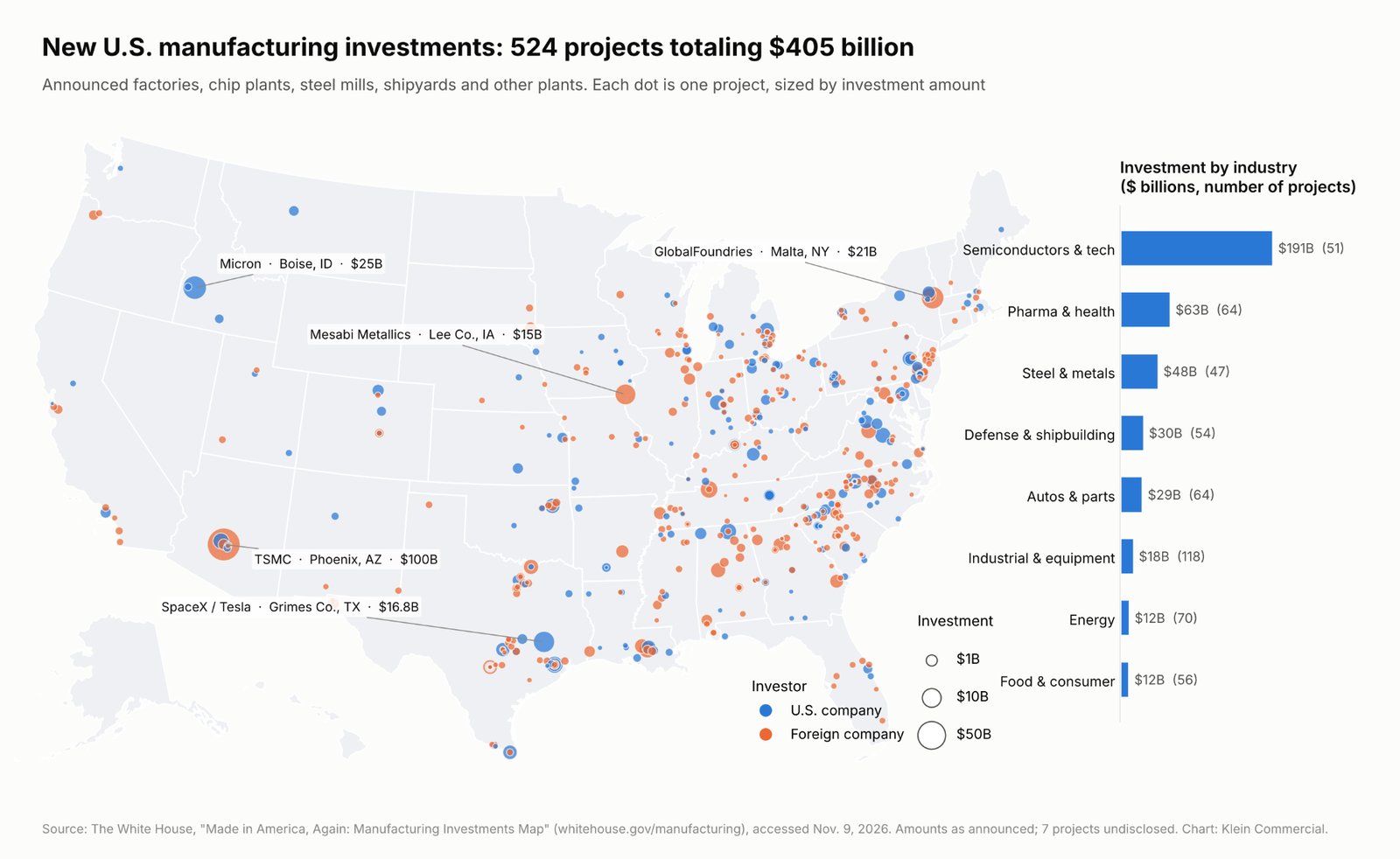
The manufacturing picture looks even stronger when you zoom out to the entire United States. A clear manufacturing upswing is under way across the country, driven by reshoring and foreign industrial investment, much of it announced under the current administration’s trade and industrial policies. These are substantial investments, and they are shifting the industrial building landscape away from West Coast distribution and toward regional production centers nearly nationwide. Auto, basic materials, AI buildout, energy and defense production are developing throughout Texas, Louisiana, the Southeast, the Midwest and Arizona — with comparatively little in Southern California or the rest of the West.
Southern California, the long-time leader in industrial buildings, is in a cyclical slump. Next time, we’ll report on the opportunities this adjustment period is creating.
Jim Klein, SIOR · Klein Commercial Real Estate, Inc. · 310-451-8121 · jimklein@kleincom.com